How to Stop Your Dog From Pulling on Walks: Training Tips Paired With the Right Gear
Walking your dog should be one of the most enjoyable parts of your day — not a battle of strength, frustration, and tangled leashes. Yet for many dog parents, pulling is a daily struggle. Whether it’s excitement, distractions, or lack of leash training, pulling can turn a simple walk into a stressful experience.
The good news? Pulling can be corrected.
With the right training techniques and ergonomic walking gear, calm and controlled walks are completely achievable.
At Dogistry, we believe successful walks come from pairing intentional training with premium, thoughtfully designed gear. Let’s explore why dogs pull, proven training strategies, and how Dogistry’s no-pull walking sets help transform everyday walks.
Why Dogs Pull on Walks
Before correcting pulling behavior, it’s important to understand why dogs pull in the first place. Pulling is rarely about disobedience — it’s usually about instinct and environment.
Common Reasons Dogs Pull
-
Excitement: Walks mean freedom, smells, people, and stimulation.
-
Distractions: Other dogs, sounds, movement, or scents can trigger forward motion.
-
Lack of leash training: Dogs aren’t born knowing how to walk calmly on a leash.
-
Reinforced behavior: If pulling gets them where they want to go, they’ll keep doing it.
Dogs naturally move faster than humans. Without guidance and proper tools, pulling becomes their default behavior.
That’s why training alone isn’t enough — and neither is gear alone. The combination is what makes the difference.
Gear First: Best Walk Accessories for No-Pull Success
Before diving into training techniques, let’s talk about equipment. The right walking gear sets the foundation for success.
Essential Walking Accessories
✔ Front-clip no-pull harness
✔ Leash with front & back attachment options
✔ Waste bag holders for distraction-free walks
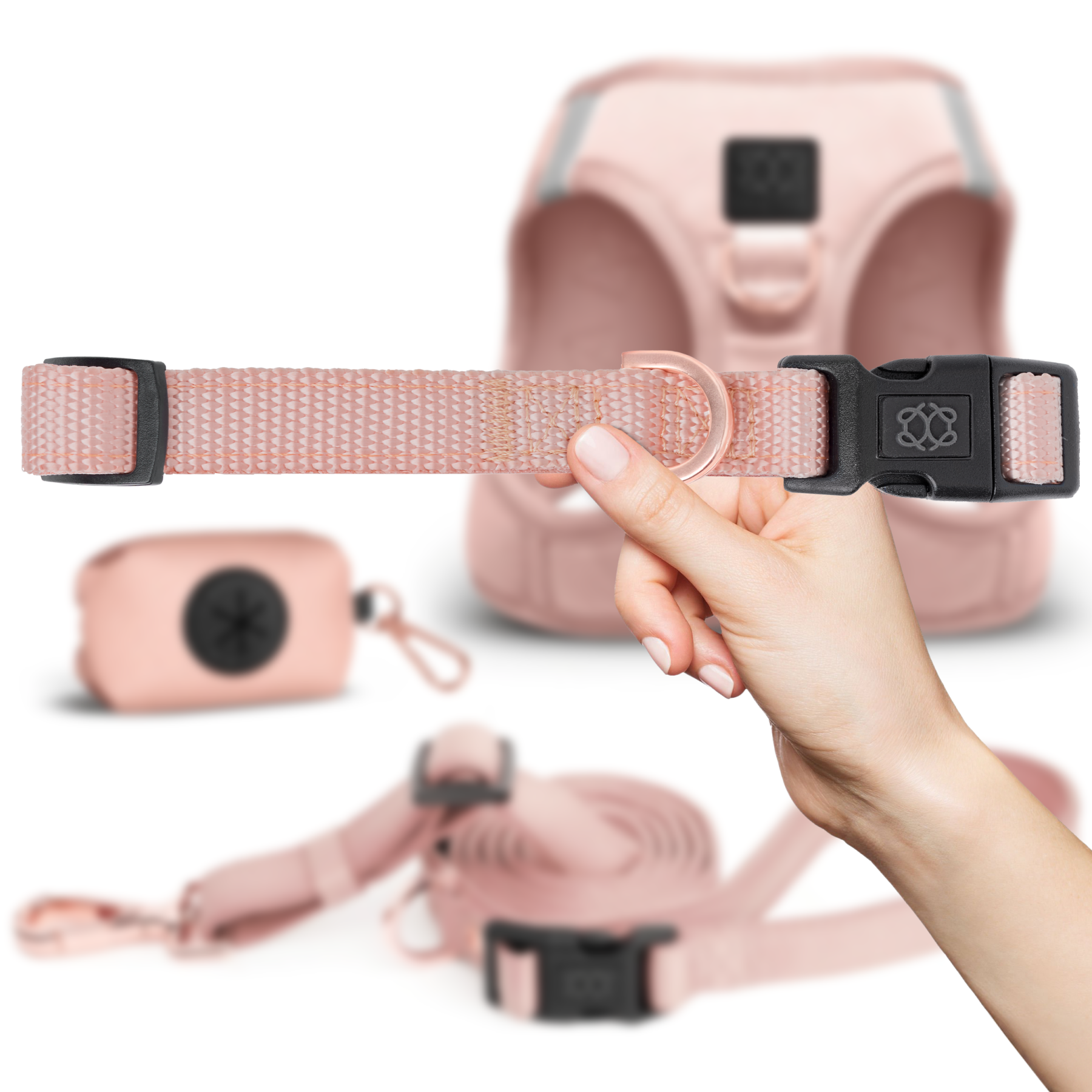
Dogistry’s walking sets are designed to support training while maintaining a clean, coordinated aesthetic.

Why a Front-Clip No-Pull Harness Matters
Unlike traditional collars or back-clip harnesses, front-clip harnesses work with your dog’s natural movement instead of against it.
When a dog pulls forward:
-
The front ring gently redirects their body toward you
-
Forward momentum is interrupted without force
-
Dogs learn that pulling doesn’t get them ahead
Dogistry’s no-pull harness is engineered to:
-
Reduce strain on the neck and throat
-
Encourage natural, calm walking
-
Maintain comfort without restricting movement
This makes it ideal for:
-
Training puppies
-
Strong pullers
-
Dogs learning leash manners
-
Everyday urban walks
Front & Back Leash Options for Flexibility
Dogistry leashes offer front and back attachment options, allowing dog parents to adapt as training progresses.
-
Front clip: Best for training and pull control
-
Back clip: Ideal once leash manners improve or for relaxed walks
This flexibility allows you to transition naturally from training mode to casual strolls without switching gear.
Waste Bag Holders That Keep Walks Smooth
Small interruptions can derail training — including fumbling for waste bags.
Dogistry’s coordinated poop bag holders:
-
Attach easily to leashes
-
Match your walking set
-
Keep your hands free and focus on your dog
When walks are seamless, training becomes more consistent.
Training Basics: Setting Your Dog Up for Success
Training starts before you even step outside.
1. Start Indoors on Leash
Dogs learn best in low-distraction environments.
-
Practice leash walking indoors or in a quiet hallway
-
Allow your dog to get comfortable wearing the harness
-
Keep sessions short and positive
This builds confidence and prevents overstimulation early on.
2. Reward Good Heel Behavior
Positive reinforcement is key.
-
Reward when your dog walks beside you with a loose leash
-
Use treats, praise, or toys your dog loves
-
Reinforce calm behavior immediately
Dogs repeat behaviors that get rewarded.
3. Stop When Pulling Starts
This is one of the most effective techniques — and the most overlooked.
When your dog pulls:
-
Stop walking immediately
-
Wait until the leash relaxes
-
Resume walking once your dog returns to position
This teaches your dog:
Pulling doesn’t move us forward. Calm walking does.
Consistency is everything.
Progressive Walk Technique: Building Better Leash Manners
Once your dog understands the basics, it’s time to progress gradually.
Slow Pace + Reward Increments
Start slow:
-
Walk a few steps
-
Reward calm walking
-
Gradually increase distance before rewarding
This prevents frustration and keeps learning manageable.
Use Treats and Clicker Training
Clicker training can dramatically improve leash skills.
-
Click when your dog walks calmly beside you
-
Reward immediately
-
Use clear, consistent timing
Over time, your dog associates loose-leash walking with positive outcomes.
Increase Distractions Gradually
Once indoor and quiet-area walking improves:
-
Move to slightly busier areas
-
Increase distance and duration slowly
-
Maintain rewards during challenging moments
Rushing this step often leads to setbacks.
Common Mistakes in Walk Training
Even with good intentions, some habits can slow progress.
Jerking the Leash
-
Causes discomfort and confusion
-
Can create fear or resistance
-
Often increases pulling over time
Dogistry’s harness eliminates the need for force-based corrections.
Walking Too Fast
Fast-paced walking encourages pulling.
-
Slow down
-
Match your dog’s learning pace
-
Focus on calm over distance
Quality walks matter more than long walks during training.
Ignoring Excitement Cues
Signs your dog is about to pull:
-
Increased tension
-
Fixated staring
-
Sudden pace change
Address excitement early with pauses, redirection, and rewards.
How the Dogistry Harness Helps During Training
Training is far more effective when your gear supports your goals.
Gentle Redirection, Not Restriction
Dogistry’s no-pull front ring:
-
Redirects forward motion naturally
-
Encourages dogs to turn back toward you
-
Reduces the physical power of pulling
This creates calmer, more controlled walks without discomfort.
Comfort That Encourages Consistency
If gear isn’t comfortable, dogs resist it.
Dogistry harnesses are designed with:
-
Ergonomic shaping
-
Secure yet flexible fit
-
Materials that move with your dog
When dogs feel comfortable, training sessions last longer and progress faster.
Confidence for Dog Parents
Knowing your gear works:
-
Builds handler confidence
-
Reduces tension during walks
-
Encourages consistent training
Confidence travels down the leash.
Why Coordinated Walking Sets Make Training Easier
Dogistry’s walking sets include:
-
Harness
-
Leash
-
Matching waste bag holder
This all-in-one approach:
-
Eliminates mismatched gear
-
Keeps walks organized
-
Reduces distractions
-
Creates a polished, intentional routine
Training thrives on structure — and structure starts with preparation.

Conclusion: Better Walks Start With the Right Pairing
Stopping your dog from pulling isn’t about control — it’s about communication, consistency, and comfort.
By pairing:
-
Proven training techniques
-
Positive reinforcement
-
Ergonomic, no-pull walking gear
You set both yourself and your dog up for success.
Dogistry’s thoughtfully designed harnesses, leashes, and walking sets support calm behavior while maintaining a clean, street-style aesthetic — proving that function and fashion belong together.
With the right tools and training, every walk can become something you both look forward to.